Essays

Ideas,
frameworks,
and
perspectives.

Essays on strategy, positioning, product narratives, and the systems behind modern software and AI.

Differentiated Truth

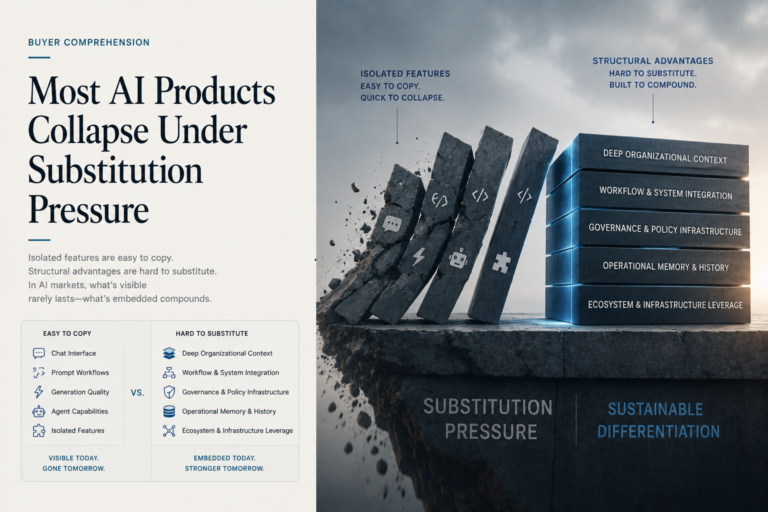
Most AI Products Collapse Under Substitution Pressure

One of the defining characteristics of modern AI markets is how quickly differentiation collapses. A company launches with a seemingly unique capability.The market reacts.Competitors respond.Model providers evolve.Adjacent platforms absorb the feature.And within months, what once appeared strategically differentiated starts looking increasingly interchangeable. This creates enormous confusion for technical companies. Especially those building products with genuinely […]

Read essay
Differentiated Truth

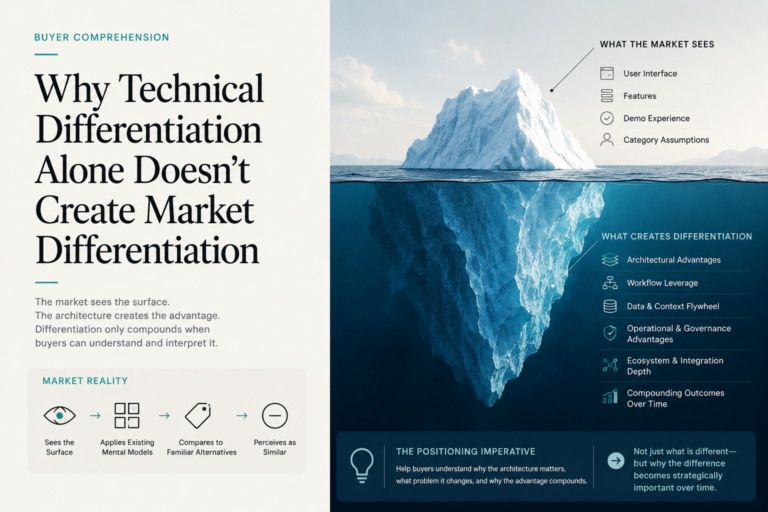
Why Technical Differentiation Alone Doesn’t Create Market Differentiation

Many technical companies assume differentiation is self-evident. The product is: From inside the company, the differentiation feels obvious. But markets do not evaluate products from inside the architecture. They evaluate them through: This creates one of the most common positioning failures in modern software markets: technical differentiation without market differentiation. The Market Compresses Complexity Most […]

Read essay
Market Tension

The Cost of Inaction Is the Real Competitor

Most companies think they compete against other vendors. In reality, the strongest competitor in most markets is usually: the existing state. Not because buyers love it. But because organizations are remarkably capable of tolerating friction for long periods of time. This is one of the most misunderstood dynamics in positioning. Companies often assume that if […]

Read essay
Market Tension

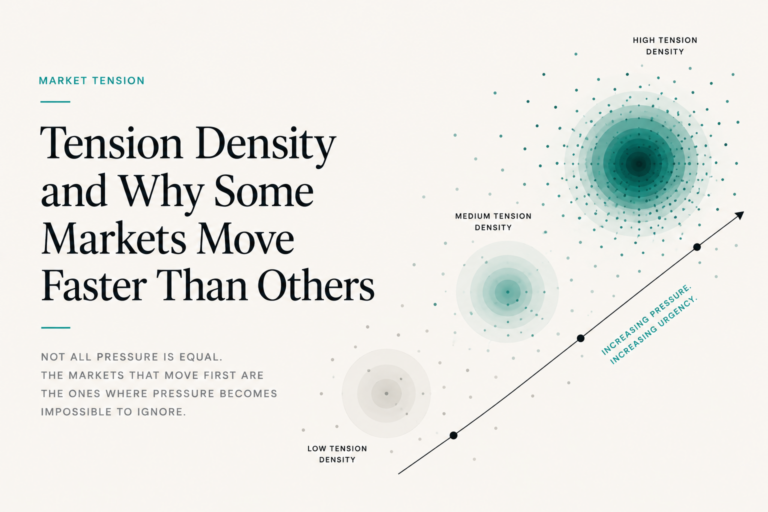
Tension Density and Why Some Markets Move Faster Than Others

From the outside, market adoption often looks irrational. Some industries move aggressively toward change while others remain stagnant for years despite having access to the same technology, the same vendors, and often the same information. One company reorganizes around an emerging category almost immediately. Another waits until the category is already mature. This is usually […]

Read essay
Market Tension

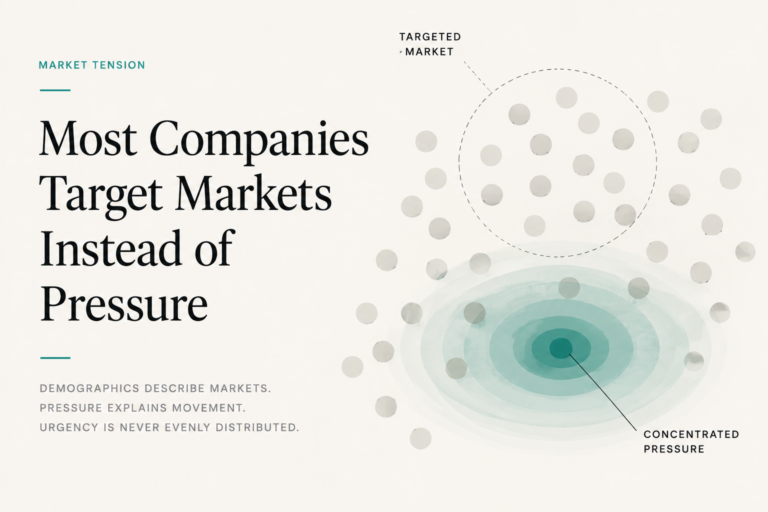
Most Companies Target Markets Instead of Pressure

One of the most common mistakes in positioning is assuming the market itself explains urgency. Companies define: Then build positioning around those categories as though they automatically predict demand. But markets are not homogeneous environments. They are pressure environments. And pressure distributes unevenly. Two companies can appear nearly identical on paper while behaving completely differently […]

Read essay
Market Tension

Positioning Does Not Create Urgency

Most positioning conversations begin in the wrong place. Companies start by asking: But positioning alone rarely creates urgency. At best, positioning clarifies urgency that already exists. This distinction matters more than most companies realize. Because many products struggle in the market not because the messaging is unclear, but because the underlying pressure inside the market […]

Read essay